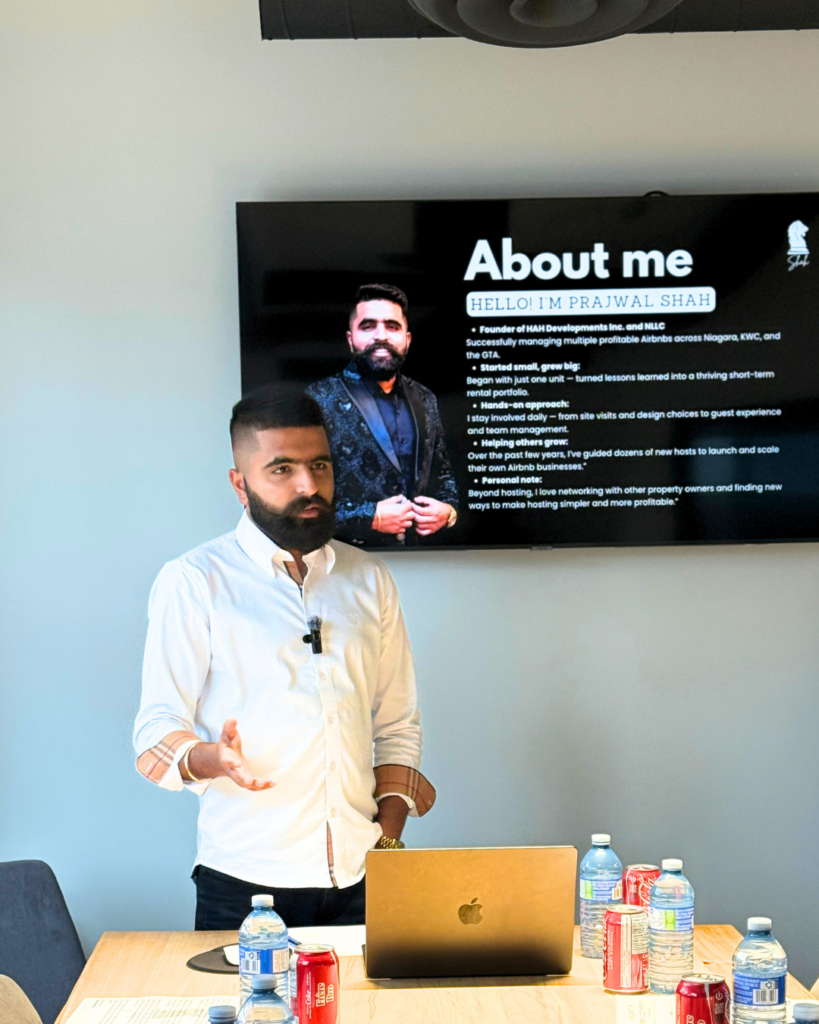
The Entrepreneur Mindset: How Successful Founders Think, Adapt, and Grow

Most people think building a business starts with an idea. It doesn’t. It starts with how you think. You can hand two people the exact same business plan, the same starting capital, and the same market opportunity, and one will quit within eighteen months while the other builds something that lasts a decade. The difference rarely comes down to talent or luck. It comes down to mindset. Research backs this up in a way that used to sound like a motivational poster but now has real data behind it. About 80 percent of new U.S. businesses survive their first year, according to Bureau of Labor Statistics figures, yet the businesses that close almost always share the same underlying pattern: no real market validation, weak cash management, and a founder who treated entrepreneurship as a personality trait instead of a set of skills that can be trained. That last point matters more than it sounds. If an entrepreneur mindset were something you’re simply born with, this article would be pointless. It isn’t. It’s learnable, and that’s the whole premise of what follows. This guide breaks down what an entrepreneur mindset actually is, why it matters more now than it did a decade ago, the specific traits that show up again and again in founder research, and a practical, step-by-step approach to building that mindset even if you don’t feel like a “natural” entrepreneur today. What Is an Entrepreneur Mindset An entrepreneur mindset is a specific way of processing uncertainty, risk, and failure that allows someone to keep moving a business forward when the outcome isn’t guaranteed. It’s not about being fearless. It’s not about working eighteen-hour days. And it’s definitely not a personality type you either have or don’t. At its core, the entrepreneur mindset is a combination of a few learnable skills working together: the ability to assess risk without freezing up, the discipline to follow through on decisions without constant motivation, and the flexibility to change course when new information shows up. Founders who have developed this mindset don’t necessarily take bigger risks than everyone else. They take better-calculated ones, and they recover faster when those risks don’t pay off. This distinction matters because so much of the popular conversation around entrepreneurship focuses on outcomes – the exit, the funding round, the revenue milestone – while ignoring the internal process that got someone there. The entrepreneur mindset is that internal process. It’s the operating system running underneath every decision a founder makes, long before any of those decisions become visible to the outside world. It’s also worth being clear about what this mindset is not limited to. You don’t need to be running a venture-backed startup to benefit from thinking this way. Property managers making pricing decisions, freelancers pitching new clients, and side-hustlers testing a product idea on weekends are all operating in the same uncertain terrain that traditional founders navigate. The mindset transfers. Why This Way of Thinking Matters More Right Now Entrepreneurship isn’t a niche pursuit anymore. Recent data shows entrepreneurial activity in the United States hit record highs in 2022 and has stayed elevated since, with younger founders driving much of that growth. Alongside that surge, 76 percent of entrepreneurs reported year-over-year growth in 2024, and 73 percent were already seeing revenue increases early in 2025 despite ongoing macroeconomic pressure. More people are starting businesses, which means the competitive bar for resilience, adaptability, and execution keeps climbing. At the same time, the tools available to entrepreneurs have changed faster in the past two years than in the previous decade combined. Founders now have to make judgment calls about which technologies genuinely move their business forward and which ones are just noise. That’s not a technical skill so much as a mindset skill: the ability to evaluate, adapt, and avoid getting paralyzed by too many options. There’s also a quieter shift happening in how founders define success. A growing number of researchers and practitioners are pointing out that survival-mode entrepreneurship – reacting to crisis after crisis, treating burnout as a badge of honor – is being replaced by a model built on sustainable momentum. That’s not a soft trend. It’s a practical one, because founders who burn out don’t build long-term companies. They build short-term ones that collapse the moment the founder does. None of this changes the fundamentals of what makes a founder successful. It just raises the stakes for actually developing the mindset instead of hoping it shows up on its own. Core Traits That Define Strong Founders Entrepreneurship researchers who study founder behavior across industries keep landing on a similar shortlist of traits. They don’t always use identical language, but the pattern is consistent: adaptability, calculated risk-taking, persistence, vision, customer focus, and – more recently – the ability to work well with modern tools. None of these are traits you’re issued at birth. They’re built through repetition, feedback, and deliberate practice. Seeing Ability as Something You Build, Not Something You’re Given The single biggest predictor of long-term founder success isn’t intelligence, funding, or connections. It’s whether someone believes their abilities can improve with effort. Psychologists call this a growth mindset, and the research on it is remarkably consistent: people who believe skills are trainable persist longer, recover faster from setbacks, and are more willing to attempt things they haven’t mastered yet. A study out of North Carolina State University, which surveyed more than 700 entrepreneurs, found that founders who believed their habits and traits could change over time were significantly better at adapting to venture-related setbacks than those who saw their traits as fixed. The founders who believed change was possible reported lower negative emotion after a setback and higher optimism about what came next. That’s not a small effect. It’s the difference between a bad quarter ending a business and a bad quarter becoming a turning point. This matters for the entrepreneur mindset specifically because so much of business is failure disguised as data. A product launch that flops, a marketing campaign
The Entrepreneur Mindset: How Successful Founders Think, Adapt, and Grow Read More »